
How to Manage the Workflow Between Dentists and Dental Laboratories (2026 Guide)
Modern digital dentistry is built on data accuracy, speed, and precision. However, many clinics and dental laboratories still rely on outdated methods such as WhatsApp, email, and manual tracking to manage critical workflows.
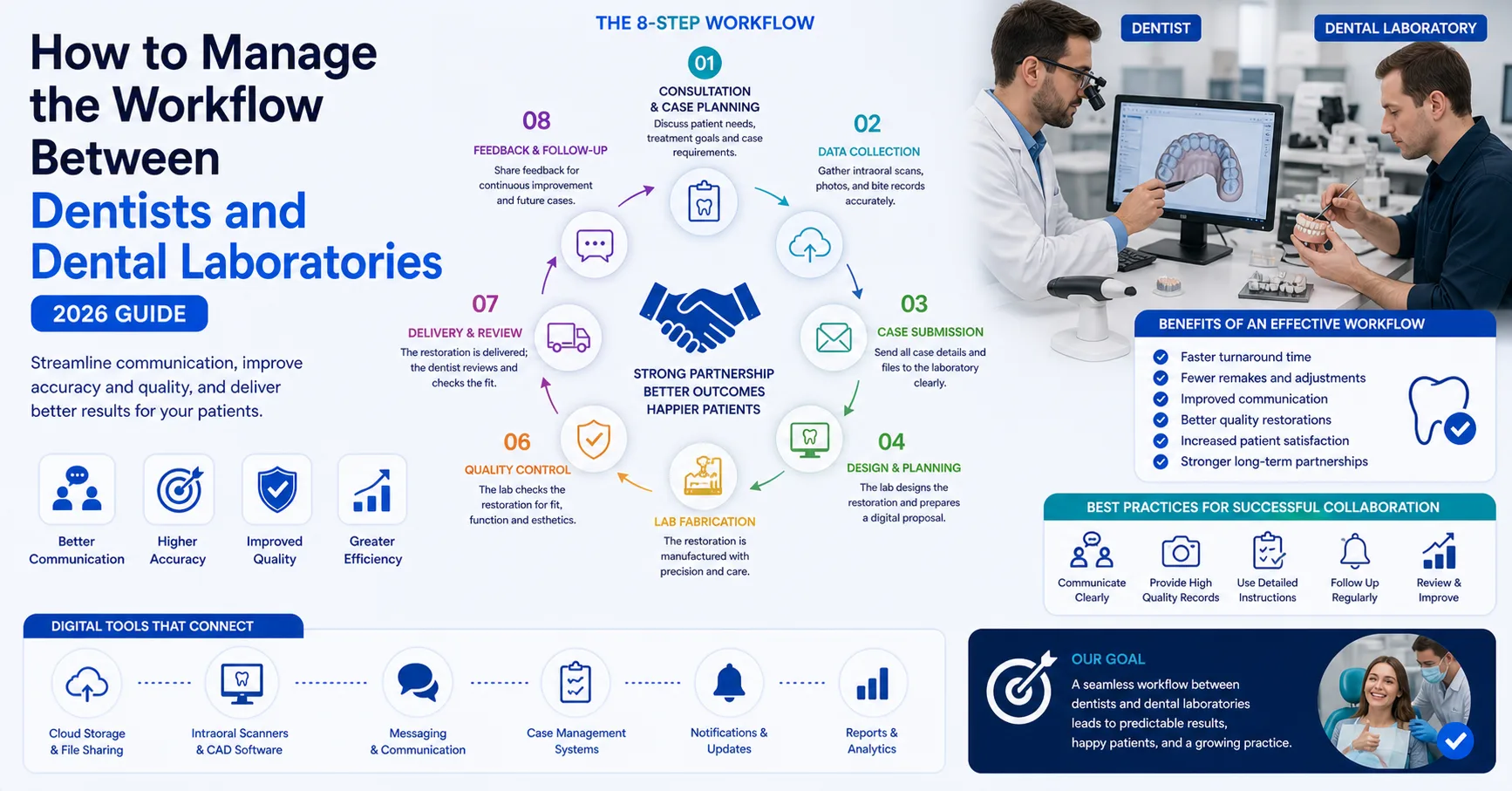
Modern digital dentistry is built on data accuracy, speed, and precision. However, many clinics and dental laboratories still rely on outdated methods such as WhatsApp, email, and manual tracking to manage critical workflows.
This leads to major issues such as:
STL file confusion and version conflicts
Lost revision requests
Delivery delays
Communication gaps
Payment disputes
At this point, centralized systems like DentaLink Pro – Dentist & Laboratory Workflow and STL Management Software provide a complete solution by managing the entire process from a single panel.
What is a Digital Dental Workflow?
A digital dental workflow refers to managing the entire process—from patient data collection to production—through digital systems.
This includes:
3D intraoral scanning
STL file generation
CAD design process
CAM production (3D printing / milling)
Delivery and application
When managed correctly:
error rates decrease
production becomes faster
quality becomes standardized
Biggest Problems Between Dentists and Laboratories
1. STL File Confusion
Incorrect versions or missing files directly impact production quality.
2. Poor Revision Tracking
Revision requests are often lost in messaging apps.
3. Lack of Workflow Visibility
There is no clear tracking of which stage a case is in.
4. Pricing and Payment Issues
Manual quotation processes create confusion.5. Communication Gaps
Technical requirements are not clearly communicated between dentist and technician.
Manual vs Digital Workflow Comparison
| Feature | Manual Workflow | Digital System |
|---|---|---|
| STL File Tracking | ❌ | ✅ |
| Revision Management | ❌ | ✅ |
| Workflow Visibility | ❌ | ✅ |
| Quotation System | ❌ | ✅ |
| Delivery Tracking | ❌ | ✅ |
Digital systems clearly outperform manual processes in every aspect.
How to Manage Dental Workflows Professionally
A modern workflow should follow these steps:
1. Case Creation
The dentist creates a case in the system.
2. Tooth Selection (FDI Chart)
Relevant teeth are selected using the FDI dental chart.
3. STL Upload
3D files are uploaded securely.
4. 3D Review
The model is analyzed in detail.
5. Quotation Process
Laboratories submit offers through the system.
6. Production Tracking
All stages are monitored in real time.
7. Delivery & Logistics
The case is completed and delivered.
Why STL File Management is Critical
STL files are the foundation of digital dentistry.
Incorrect file usage can result in:
production errors
patient dissatisfaction
increased costs
Therefore, STL files must be:
version-controlled
securely stored
centrally managed
3D Viewer and Technical Communication
Advanced systems include a 3D viewer that allows:model rotation
zooming
detailed inspection
annotations and pin comments
This significantly improves communication between dentist and lab technician.
Advantages of Digital Systems
Up to 70% time savings
Reduced error rates
Faster delivery times
Clear communication
Measurable workflow performance
Why Use DentaLink Pro?
Instead of managing all these processes manually, using a professional system is essential.
With DentaLink Pro:
Dentist, laboratory, and admin panels are unified
STL / OBJ / PLY file management
3D model visualization
Quotation and escrow payment system
Revision and quality control tracking
Delivery and logistics management
Messaging and notification system
All processes are managed from a single platform.Who is it for?
Dental clinics
Private practices
Dental laboratories
Dental chains
Medical centers
Frequently Asked Questions (FAQ)
What is an STL file?
A digital file format representing a 3D dental model.
Why is dental software necessary?
To streamline workflows, reduce errors, and improve efficiency.
Is it difficult to use digital systems?
No, modern platforms are designed with user-friendly interfaces.
Conclusion
Managing dental workflows manually is no longer sustainable.
With digital systems:
processes become faster
errors decrease
communication improves
If you want to take your dental operations to a professional level, using a system like DentaLink Pro is no longer optional—it is essential.